
Star of Hope selects ThinkDSC as their preferred security systems integrator
Star of Hope wanted to install a security system at the Women and Family Development Center that would allow them to provide a safe environment in...
3 min read
DSC
:
Updated on August 3, 2026
Over the Fourth of July weekend, two Flock license plate cameras near Washington Avenue and Westcott were found cut in half and covered in spray paint. Within a week, ABC13 found at least half a dozen more cut down across the city. ABC13 found at least half a dozen more cut down across the city. Houston police are investigating. As of this writing, no arrests have been made.
The story has kicked off a loud public debate. Some Harris County residents asked commissioners to cancel the county's Flock contract over privacy concerns. Commissioners voted instead to keep the devices available countywide. That debate will keep playing out in commissioner court and on the news.
We're not here to settle it. Flock's network belongs to the public agencies and groups that contract for it, and the privacy questions around license plate readers are for the community to work through.
But if you own or manage a commercial property, this story should raise a much more practical question: if someone attacked one of your cameras tonight, how long would it take you to find out?
For a lot of buildings, the honest answer is weeks. Sometimes longer. Usually the day someone needs footage that isn't there.
First, a quick point worth making, because tenants and employees may ask.
Flock cameras are license plate readers on public roads. They photograph plates, log vehicle descriptions, and share that data with law enforcement agencies that subscribe to the network. That data-sharing model is exactly what the current debate is about.
The cameras on your building work differently. They watch your property. The footage belongs to you. You decide who can view it, how long it's kept, and when it gets shared — usually only when police ask for help after an incident. If anyone on your staff raises the Flock story as a concern about your own system, that distinction is the answer.
Here's the uncomfortable part. Whoever cut down those cameras understood something simple: a camera only matters while it's working.
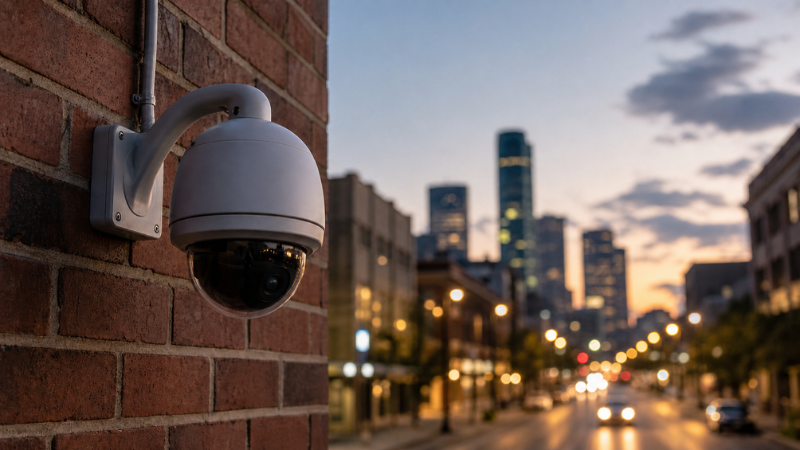
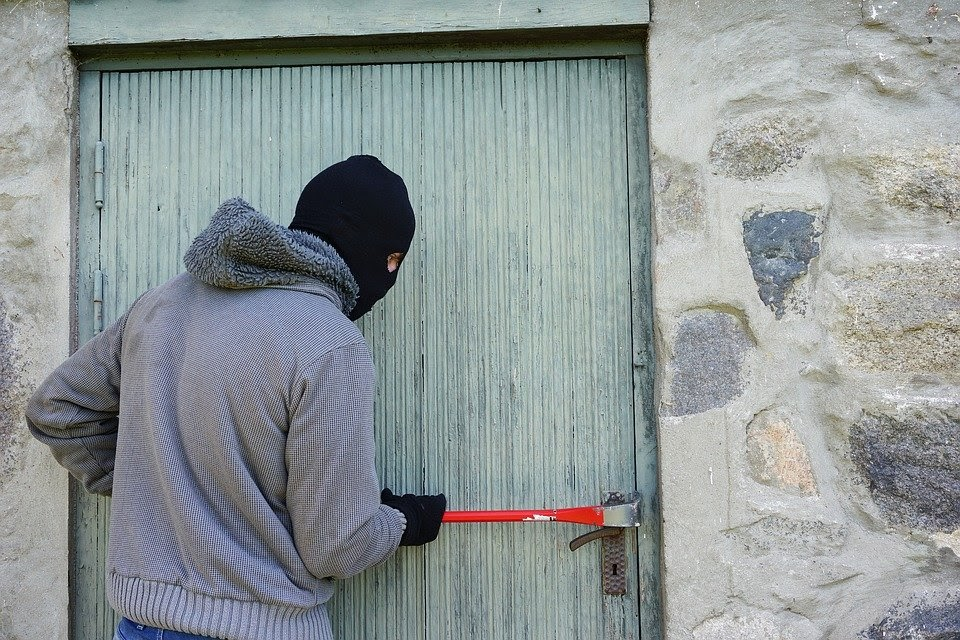
That's true whether the attacker is making a political statement or planning a break-in. Disabling cameras before a crime is not rare. Spray paint on a dome, a lens twisted toward the sky, a snipped cable — we've seen all of it on service calls. And the tactic works best against buildings where nobody is watching the watchers. If a dead camera can sit unnoticed for a month, the person who killed it has a month.
Modern video systems can notice an attack the moment it happens. Two features do most of the work.
Tamper detection. The camera compares what it sees now to what it normally sees. If the view suddenly changes — a covered lens, spray paint, a hard knock that points the camera at a wall, a lens knocked out of focus — the system flags it and sends an alert. Most enterprise camera lines from our partners, including Hanwha, Avigilon, i-PRO, and cameras managed under Genetec, support some form of this today. On many systems it simply needs to be turned on and configured.
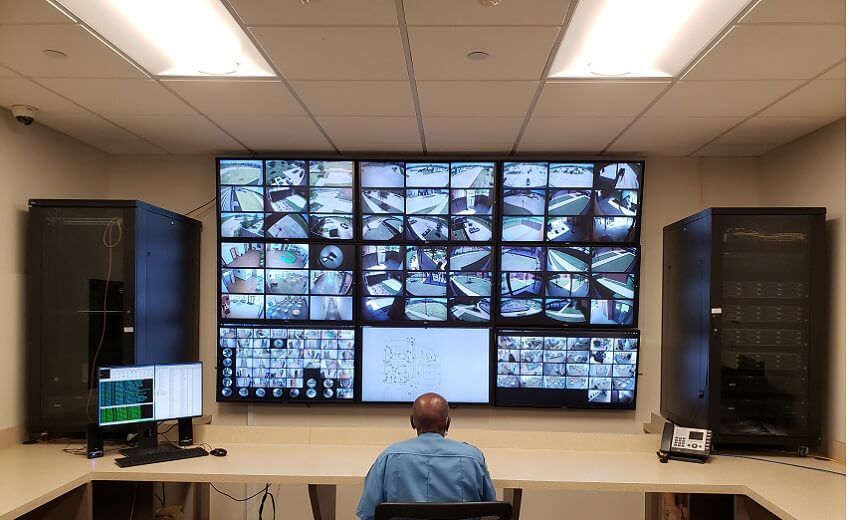
Health monitoring. Tamper detection catches an attack on the image. Health monitoring catches everything else — a camera that drops offline, a cut cable, a failed power supply. The system checks in with every device and tells you when one stops answering, instead of waiting for you to notice a blank tile on a screen nobody looks at.
If your system was installed more than a few years ago and nobody has touched the settings since, there's a fair chance both features are sitting unused. That's one of the first things we check on a service visit.
Alerts are the safety net. Good installation is the armor. A few things that make a real difference:
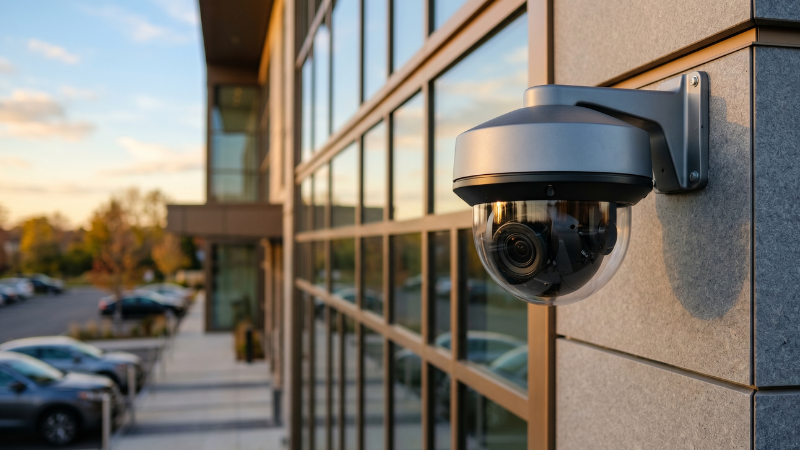
Mounting height matters — a camera at eight feet invites a swing from anything handy, while one at twelve feet needs a ladder and time. Vandal-rated housings (look for an IK10 impact rating) shrug off blows that would shatter a standard dome. Exposed cable is the easiest target of all, so runs should live in conduit or inside the structure. And overlapping coverage means the camera that gets attacked is seen by another one — which is often how vandals get identified.
Found a damaged camera? Leave it alone and photograph everything before anyone touches it. File a police report — vandalism of security equipment is a crime, and the report matters for insurance. Pull and save footage from every nearby camera right away, before retention windows overwrite it. Then call your integrator to get the gap covered quickly, because a known blind spot is worse than an unknown one.
The cameras that got cut down in Houston were noticed within days, because an entire network operator and several news crews were paying attention. Your building doesn't have that luxury. It has you, your staff, and whatever alerts your system is set up to send.
We can't tell you how the Flock debate should end. We can tell you that every camera on your property should be able to report its own attack — and that most systems we walk into aren't set up to do it.
If you're not sure whether yours is, that's an easy thing to find out. We'll walk your site, check tamper and health settings, and flag the easy targets — whether we installed the system or not. Call us at (713) 464-8407 or visit thinkdsc.com.
Star of Hope wanted to install a security system at the Women and Family Development Center that would allow them to provide a safe environment in...
States’ efforts to slow the spread of the COVID-19 virus through “shelter in place” orders have resulted in the temporary closure of many businesses....
Most commercial video systems don't fail in obvious ways. They fail quietly. The cameras still light up. The monitors still show live feeds. The...