
How Often Does a Commercial Fire Alarm Have to Be Inspected in Texas?
A commercial fire alarm system in the Houston area is tested at least once a year. That is the baseline most building owners know.
6 min read
DSC
:
Updated on November 2, 2026
If your fire alarm inspection company misses visits, sends deficiency reports with no prices, or stops calling back, you can switch. The safest time to do it is before your next inspection comes due, not after. The duty to keep the system inspected stays with the building owner the whole time. So the goal of a switch is simple: no lapse in testing, no lapse in monitoring, and no lost records.
This guide is for the facilities director or property manager in Houston who is unhappy with a current vendor and wondering whether, when, and how to change. It covers what the code requires, what to collect from your old company, how to time the handoff, and a checklist you can use this week.
Most switches start with one of four problems. Any one of them is worth a direct conversation with your vendor. Two or more usually means it is time to look elsewhere.
A late inspection is the most serious of the four. It is the one that puts a code violation on your building, not on the vendor.
The building owner. NFPA 72, the national fire alarm code, puts the duty to inspect, test, and maintain the system on the owner or the owner's designated representative. A property management firm can carry that duty under its management contract. Your inspection company does the work, but hiring one does not move the responsibility.
In Houston, the requirement comes from the local fire code, not from a statewide Texas law. The City of Houston enforces the 2021 International Fire Code under Ordinance No. 2023-9071, effective January 1, 2024. Unincorporated Harris County has enforced the 2021 International Fire Code since January 1, 2025. Both send you to NFPA 72 for inspection and testing, and Texas uses the 2019 edition of that standard under 28 Texas Administrative Code §34.607.
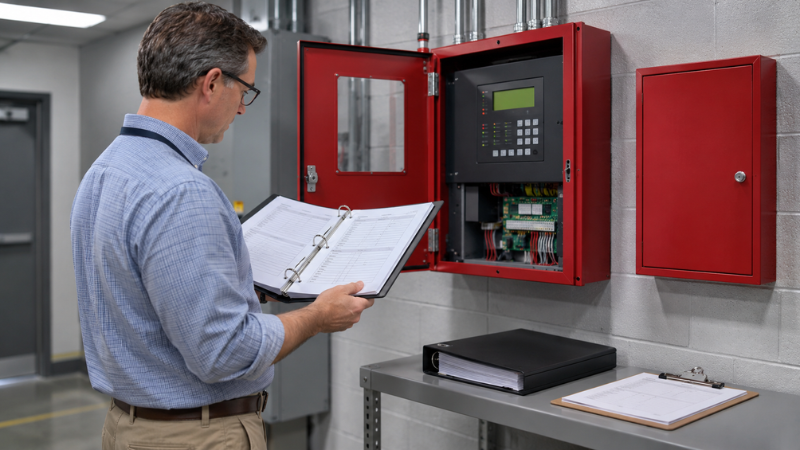
In practice, that means a full test at least once a year, plus some items every three or six months. We walked through that full schedule in How Often Does a Commercial Fire Alarm Have to Be Inspected in Texas? The fire code also expects you to keep records of that work and show them to the fire marshal when asked.
The state's part is licensing. Any company that inspects your fire alarm must be registered with the Texas State Fire Marshal's Office. Texas counts inspection and testing as fire alarm "service," so registration covers inspectors, not just installers. Commercial inspections are done or supervised by a licensed Fire Alarm Technician or Fire Alarm Planning Superintendent.
Often, yes. But read the agreement before you call anyone. Look for four things:
If your agreement renews on January 1, 2027, the notice window may already be open in November 2026. Check now.
We are integrators, not lawyers. If the language is unclear, or the vendor says you cannot leave, have your attorney read the contract before you send notice.
Collect everything a new company needs to pick up where the old one left off. Ask in writing, and keep a copy of the request.
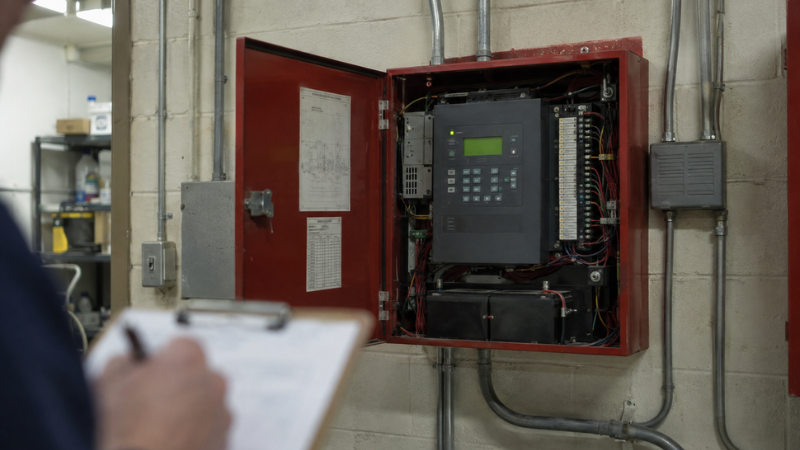
Before you ask, check the panel room. Many newer systems have a documentation cabinet at the panel that is meant to hold drawings and records. Some of what you need may already be on site.
One honest limit. Some fire alarm panel brands are sold and serviced through a small dealer network. If your panel is one of them, not every company can reprogram it, even with the passwords. Ask a new vendor whether it is authorized on your panel brand before you give notice to the old one.
Book the new company's first inspection before your next test is due. Then let the old agreement end. Not the other way around.
Three dates matter:
Many owners ask the new company for a full baseline inspection at the start. It costs a visit, but it gives you a clean record you trust from day one.
DSC inspects, tests, and services commercial fire alarm systems for office buildings, schools, medical facilities, mid-rise properties, and HOA communities across Houston. DSC is registered with the Texas State Fire Marshal's Office under Alarm Certificate of Registration ACR-1930865. It is an authorized dealer and certified installer for Edwards, Honeywell, and Siemens fire alarm systems. If you are comparing providers, here is how DSC handles commercial fire alarm inspection and service in Houston.
Expect more deficiencies than your last report showed. That is not always an upsell. A new set of eyes doing a full test often finds devices a rushed vendor skipped.
Still, every item should be easy to check. Each deficiency should name the device, its location, the problem, and the code section. A photo helps. The report should also rank the items. An impairment, where the system or part of it cannot do its job, needs prompt repair. Other items can be planned into a budget.
Switching vendors does not erase old deficiencies. If a problem was on last year's report, the fire marshal can see it too. And if some devices could not be tested, such as those in locked tenant suites or occupied patient rooms, an honest report says so.
The steps are the same everywhere. The pressure points are not.
Pull three things today: your last inspection report, the date of your last full test, and your service agreement's renewal date. Those three tell you how much time you have.
This article is general information, not legal or code advice. Your local fire marshal has the final word on your building, and your attorney should weigh in on your contract.
If you would like a second opinion on a report, or help planning a handoff with no gap, contact DSC. Call (713) 464-8407 or email info@thinkdsc.com.
A commercial fire alarm system in the Houston area is tested at least once a year. That is the baseline most building owners know.

On the afternoon of October 16, 2026, a fire started on a second-floor balcony at an apartment complex on Forum Park Drive in southwest Houston. Wind...
Is Managing Separate Fire Alarm and Security Vendors Costing Your Business More Than You Think?