3 min read

What Houston Summers Do to Your Outdoor Security Equipment

What Houston Summers Do to Your Outdoor Security Equipment

Houston had 145 days at 90 degrees or hotter in 2025. That is the most in the city's history. For two out of every five days last year, the air outside was at least 90 degrees, and on many of them it felt like 100 to 105.

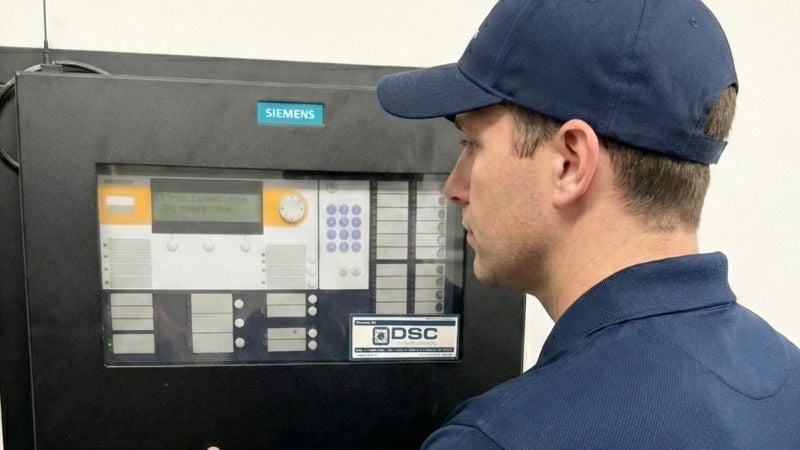
Here is the good news. The heart of your security system is probably fine. Most commercial buildings keep their recorders and servers in a data closet with steady air conditioning. That gear lives in a comfortable room all year. (If you run a small recorder in a hot attic or a back storage room, that is a different story — but most of our clients don't.)

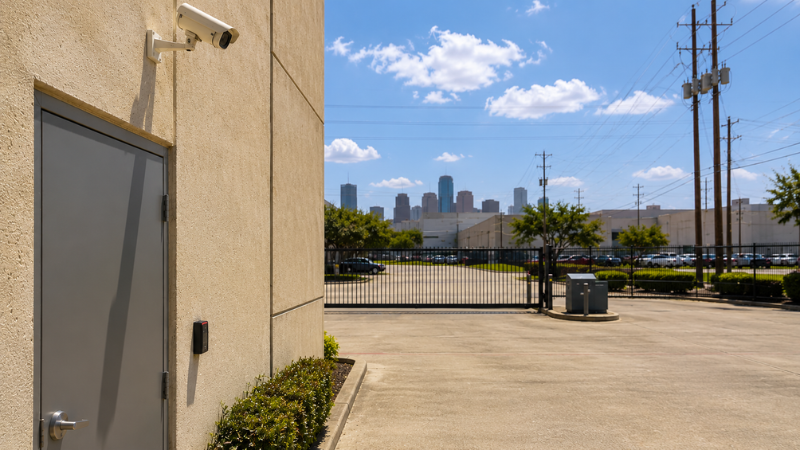
The equipment that takes the real beating is everything mounted outside. Your cameras, your card readers, and your gate operators sit in the Texas sun all day, every day, for months. They don't fail in a dramatic way. They wear down slowly. By the time something stops working, the heat has usually been chipping away at it for a long time.

Let's walk the outside of your building and look at what summer is really doing.

Your cameras run hotter than the air around them

A camera in direct sun is not the same temperature as the air. It can run about 20 percent hotter. So when the air hits 120 degrees on a parking lot wall, the camera inside its housing can reach 140 degrees or more. That is past the limit many cameras are built for. Dark-colored housings soak up even more heat.

When a camera spends the summer above its rated temperature, a few things happen. The sensor and the electronics age faster. You may see dropped connections, blurry or pixelated video, or a feed that freezes for no clear reason. In bad cases the camera shuts itself off to cool down.

Heat also affects the small filter that lets a camera switch between day and night mode. When that part warps, you get color that looks off or a camera that gets stuck in the wrong mode.

Then there is the sun itself. Over time, UV light breaks down the clear dome on dome cameras. The plastic yellows and clouds, like an old pair of headlights. The camera may work fine, but the picture coming through that cloudy dome gets soft and hazy. You lose detail right when you need it.

Card readers in the afternoon sun

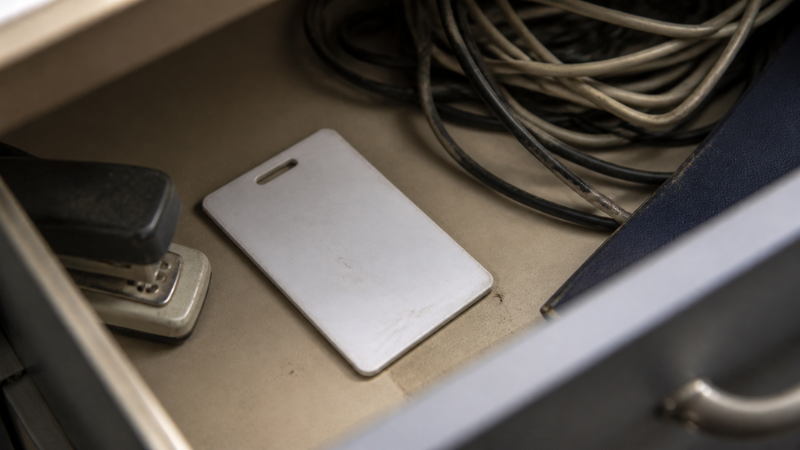
Most outdoor card readers are built to handle real heat. On paper, many are rated to about 140 degrees. The problem is that direct afternoon sun can push the surface of the reader past that point.

We have seen readers that simply stop working until they cool down. There are documented cases of readers that needed about 15 minutes in the shade before they would respond again. Picture an employee standing at a back door at 2 p.m., badging over and over, while the reader sits there baking and ignoring them.

A reader that is rated for the heat can still fail if it is mounted in full sun with no cover or shade. Where it sits matters as much as the spec sheet.

Gate operators bake in the parking lot

Gate operators may have the hardest job of all. They sit in an open lot with no shade, and they hold a control board inside a metal or plastic box.

Heat causes metal to expand. That expansion can loosen the connections inside the operator, and even a tiny gap can interrupt the power. Cheaper control boxes are not well sealed and tend to trap heat, which wears the board down faster. The signs are easy to miss at first: the gate resets on its own, moves slower than it used to, or shuts down in the middle of a cycle. Heat even raises the resistance in the wiring, so less power reaches the motor.

The quiet part: batteries, boards, and seals

Some heat damage you can't see at all, and it shows up across every outdoor device.

Backup batteries are the clearest example. The rule of thumb is that a sealed battery loses about half its life for every 18 degrees above 77. A battery rated to last several years in a mild climate can give out in a fraction of that time when it sits in the Houston heat. So when the power blips, the backup that should keep your system running may already be worn out.

The small parts on a circuit board, called capacitors, follow the same pattern. Heat dries them out and shortens their life, and they often decide how long the whole board lasts.

Finally, the rubber seals and cable jackets that keep water out get hard and crack under constant sun. Once a seal fails, the next afternoon storm can push moisture right into the box. That is why heat damage and water damage often show up together.

What a summer check catches

None of this means your outdoor equipment is doomed. It means the gear outside needs attention before the worst of the heat, not after something quits.

A good preventative visit catches these problems early. A technician can check that cameras are reading the right temperature and aren't drifting, clean or flag clouded domes, test card readers in real conditions, look inside the gate operator for loose or heat-worn connections, and load-test the backup batteries that the heat may have already weakened. Most of these are small fixes when you find them in June. They turn into emergency calls when you find them in August.

If you are not sure when your outdoor equipment was last checked, this is a good month to find out. At DSC, we are happy to walk your site, tell you honestly what is holding up and what isn't, and help you plan around it. No pressure — just a clear picture of where things stand before the next heat wave rolls in.

How to Know When Your Safety Systems Need an Upgrade

How to Know When Your Safety Systems Need an Upgrade

Most buildings rely on systems that were installed years ago—sometimes decades ago. Fire alarms, cameras, access control panels, intercoms, intrusion...

Read More
4 Things a System Checkup Can Tell You

4 Things a System Checkup Can Tell You

Understanding What a System Checkup Really Tells You Most buildings don’t ignore their systems on purpose.
Read More