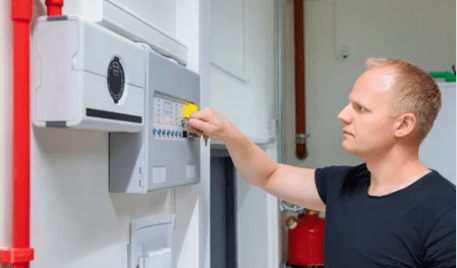
How Often Should You Inspect Your Fire Safety Systems?
In 2019, fire-related property loss costs exceeded 37 million dollars in the United States alone.
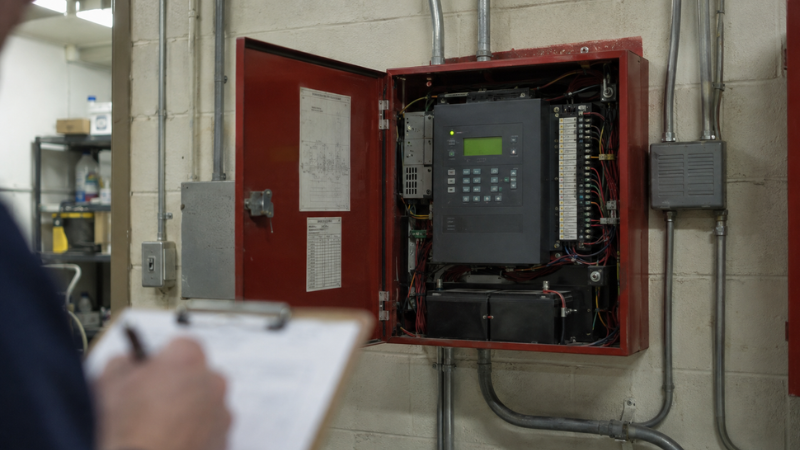
6 min read
DSC
:
September 14, 2026
A commercial fire alarm system in the Houston area is tested at least once a year. That is the baseline most building owners know.
Two things about it surprise people. First, the yearly requirement comes from the fire code your city or county adopted, not from a statewide Texas law. Second, the yearly test is not the whole schedule. Some parts of your system are checked every three or six months, and one common test runs on a two-year cycle.
Here is how the schedule actually works, who enforces it around Houston, and how to tell if the inspection you paid for was complete.
At least once a year in most places, but the rule is local rather than statewide. Texas has no single law that orders every commercial building to test its fire alarm each year. That duty comes from the fire code your local jurisdiction adopted, and Texas jurisdictions do not all adopt the same one.fire alarm
In the Houston area, both major jurisdictions land in the same place:
The International Fire Code requires fire alarm systems to be inspected, tested, and maintained under NFPA 72. So inside Houston and in unincorporated Harris County, yearly testing is the floor.
Outside those areas the answer can change. Under Texas Local Government Code Section 233.061, only counties above 250,000 people, or counties next to one, may adopt a fire code at all. Many Texas counties are not even eligible. If your building sits in one of those areas, your yearly test may be driven by your insurance carrier or your lease instead of by code.
The 2019 edition, in two different ways.
The State Fire Marshal's Office sits inside the Texas Department of Insurance. Under 28 Texas Administrative Code, Section 34.607, it adopts NFPA 72-2019 along with roughly a dozen other standards, including NFPA 25-2020 for sprinkler systems and NFPA 101-2021. That rule was last amended effective September 1, 2023.
The 2021 International Fire Code also points to NFPA 72-2019. So the state licensing rules and the local building code line up on the same edition.
This matters when you read advice online. NFPA has published 2022 and 2025 editions of NFPA 72 since then, and several requirements changed between editions. Texas is still on 2019. An article written against a newer edition, or an older one, can give you a frequency that does not apply to your building.
NFPA 72 treats inspection and testing as two different jobs on two different clocks. An inspection is a visual check. A test makes the device actually operate. A lot of confusion about frequencies comes from mixing the two.
Under the 2019 edition, common intervals include:
Two notes worth having.
Off-premises transmission equipment is tested annually, not quarterly. Quarterly was the requirement in older editions of NFPA 72 and it still shows up in tables circulating online. Under the 2019 edition it is a yearly item.
Waterflow and tamper switch testing also appears in NFPA 25, which Texas adopts as well. That is a genuine overlap, and it is a common reason nobody is sure whether the fire alarm contractor or the sprinkler contractor owns that test. In a warehouse or a distribution facility with both systems, it is worth settling in writing.
Smoke detectors have their own cycle. Under NFPA 72 Section 14.4.4.3, sensitivity is checked within one year after installation, then every alternate year after that. Once a detector has passed two calibration tests in a row and stayed inside its listed sensitivity range, that interval can be stretched to a maximum of five years.
The extension is not automatic. It requires records of nuisance alarms and their trends. If nuisance alarms in an area increase over the prior year, calibration testing resumes for that area.
Sensitivity testing is not the same as the yearly function test. The function test checks that the detector sets off an alarm. The sensitivity test checks that it reacts at the right smoke level — not too soon, not too late. A detector that has drifted out of range will still pass a function test. That is one reason a building with alarms that keep going off can still have a clean report in the file.
Two authorities matter here, and they do different jobs.
The State Fire Marshal's Office licenses the people and the companies. A firm doing fire alarm work in Texas must hold a certificate of registration from the State Fire Marshal's Office, which the agency calls an Alarm Certificate of Registration. Individual technicians hold their own licenses. For a commercial system, the inspection is performed or directly supervised by a Fire Alarm Technician (FAL) or a Fire Alarm Planning Superintendent (APS). Residential licenses do not cover commercial work.
This is not an installation-only rule. Texas Insurance Code Section 6002.002 defines "service" to include inspection, maintenance, repair, and testing, and Section 6002.151 requires registration for anyone in the business of servicing fire alarm systems. Inspection is squarely inside it.
Your local fire marshal enforces the code on your building. Inside Houston city limits, that is the Houston Fire Marshal's Office. In unincorporated Harris County, it is the Harris County Fire Marshal's Office, which conducts annual fire inspections of existing facilities. They can cite a building, order repairs, or red-tag a system. They are also the ones who ask to see your records.
One scope limit worth knowing in the county. Under Texas Local Government Code Section 233.062, a county fire code reaches commercial establishments, public buildings, and multifamily buildings of four or more units — and it excludes industrial facilities that maintain a fire brigade meeting federal OSHA requirements. An industrial plant in unincorporated Harris County may sit outside the county fire code entirely while still carrying insurance and corporate requirements.
This split also matters when a property crosses a line. A school district or a campus with buildings inside and outside Houston may deal with two fire marshals who read the same code section a little differently. The state license rule does not change. Local enforcement does.
Insurers and leases add a third layer. Many policies and leases call for yearly testing on paper no matter what the code says, and a missing report can slow down a claim.
The State Fire Marshal's Office runs a public search for registered companies and licensed individuals at appscenter.tdi.texas.gov/reports/p/sfmo. Use the full address — the bare domain redirects elsewhere. Look up the firm that services your building and confirm its registration is current.
One quirk is worth knowing. The page states that a search will not return results if the company's insurance is expired or not on file, and that applies to both the company search and the individual licensee search. So a blank result is not proof that a firm is unregistered. It does mean something is out of date and worth a phone call.
A tag on the panel is not a report. A complete record should include:
That last item is the one most often missing. NFPA 72 has no general sampling allowance for periodic testing — every initiating device and every notification appliance is supposed to be tested within its interval. So if a report on a twenty-year-old building shows no problems and no exceptions, ask questions. Devices behind locked tenant suites, above hard ceilings, or in occupied patient rooms often do not get tested, and an honest report says so.
A fire alarm inspection is not a whole-building life safety check. These are separate rules on separate clocks:
Medical clinics and schools tend to carry all four. They often add mass notification and intercom gear tied into the fire alarm. An office building carries all four plus elevator recall, and in many cases a radio coverage system for first responders. Knowing which contractor owns which clock is half the job in a multi-tenant building.
DSC designs, installs, inspects, and services fire alarm and life safety systems — along with access control, video surveillance, intercom, and bi-directional amplifier systems — for schools, medical facilities, office buildings, warehouses, and multi-building campuses across Houston and Texas.
Pull your latest inspection report and check three things: the date, the tech's license number, and whether the report lists any devices that were not tested. Those three answers tell you fast whether you are covered or whether you have a gap to close.
Codes get read differently from one jurisdiction to the next, and this article is general information rather than legal or code advice. Your local fire marshal has the final word on your building, and your attorney or insurance carrier should weigh in on anything in a contract.
If you want a second set of eyes on a report, or you are not sure when your system was last fully tested, DSC can walk through it with you. Call (713) 464-8407 or email info@thinkdsc.com.
In 2019, fire-related property loss costs exceeded 37 million dollars in the United States alone.
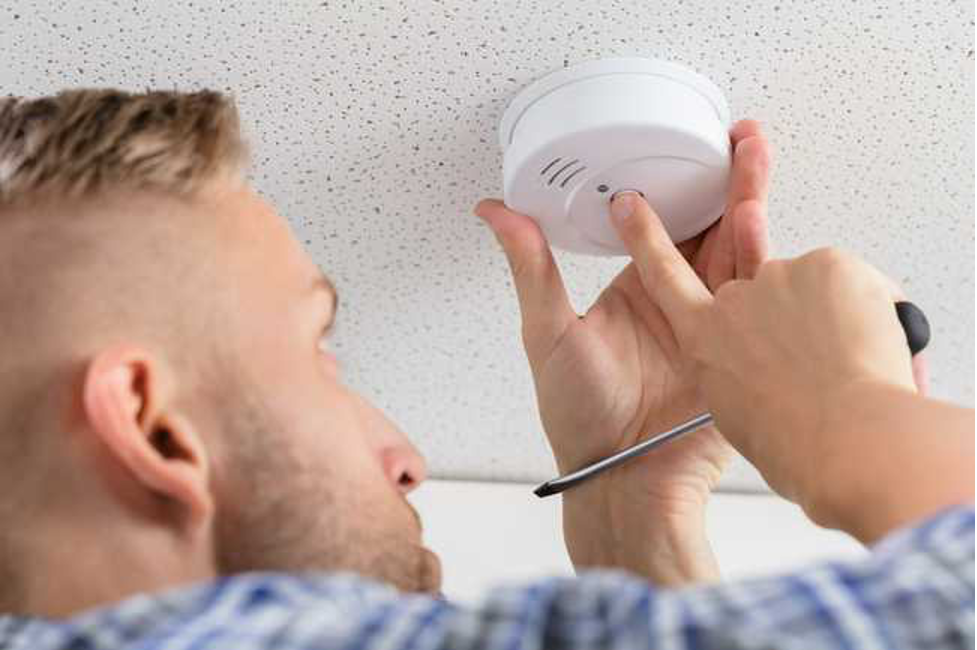
The sounds from fire detection and alarm system are important because they detect emergency or fire situation within a building. Often times, older...
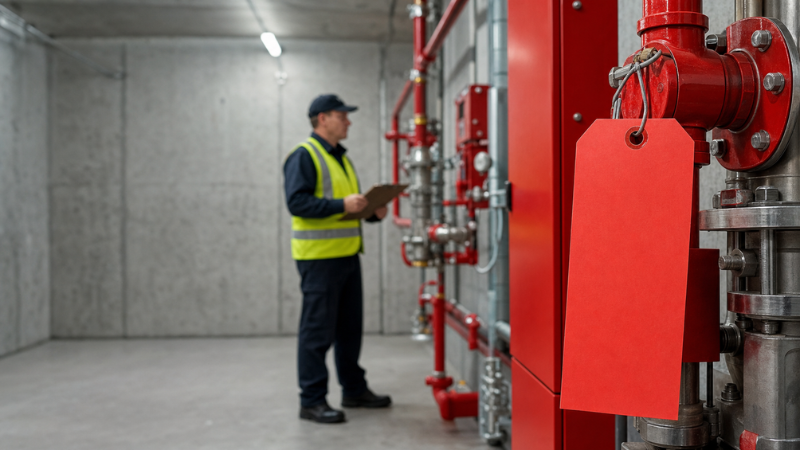
Most building problems give you time. A leaky roof, a slow elevator, a parking lot that needs repaving — none of them shut you down overnight. A red...